 Skip to contentSkip to footer
June 2026
Pat Metheny Side Eye III+

After a few years of absence, Pat Metheny returns to Krakow. His performance will be part of a world tour promoting Side-Eye III+, the artist’s latest album, which is scheduled for release in February this year
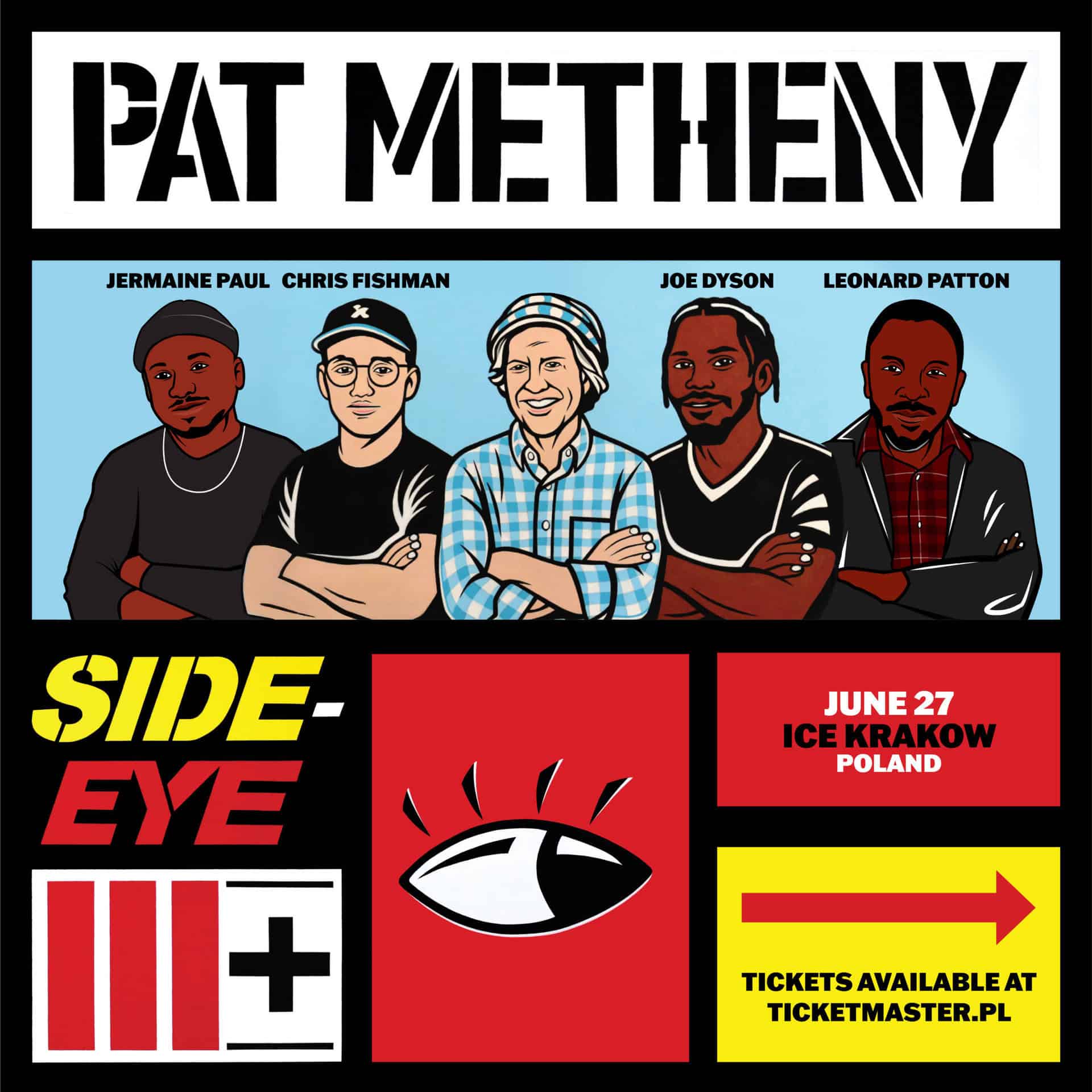
LINEUP:
Pat Metheny – Guitar
Joe Dyson – Drums
Chris Fishman – Piano/Keyboards
Jermaine Paul – Bass
Leonard Patton – Percussion/Vocals
This is another installment of Metheny’s concept, based on an open dialogue with extremely talented musicians of the younger generation invited to develop new ideas, improvisations and sounds together. The music refers to his earlier achievements, but is told in a contemporary, dynamic language, exploring a wide range of means of expression of the guitarist.
During the concerts, the leader’s new compositions, recorded on “Side-Eye III+”, will be presented. As many as fifteen musicians took part in the studio recordings — hence the “plus” sign in the name of the project — while on tour Metheny will be accompanied by: Chris Fishman (piano, synthesizers), Joe Dyson (drums), bassist from California Jermaine Paul, and percussionist and vocalist Leonard Patton. The sound and composition of the band are a bit reminiscent of Pat’s famous band from the 80s. Each performance is to function as a kind of laboratory, in which Metheny’s ideas will take their final shape during the performance. The formula of spontaneous playing is always conducive to surprises and will certainly make concerts different from each other in form and course. The details of the project still remain shrouded in mystery. So far, only one recording has been made available (In On It announcing the material), but even this short clip was enough to sell out tickets for concerts in many cities.
Pat Metheny was born in 1954 in Kansas City into a family of musicians. Initially, he played the trumpet, then he reached for the guitar. In a short time, he reached a level that allowed him to perform with the leading jazzmen of Kansas. As a teenager, he began studying at the Berklee College of Music. There he came under the wing of Mick Goodrick (John Scofield and Bill Frisell, m.in others), who taught him not only technique, but also how to think about the guitar in terms of style, timbre and narrative. At the age of 19, he joined Berklee’s faculty and one of his students was Mike Stern.
He began his stage career in 1974 alongside vibraphonist Gary Burton. A year later, with the participation of m.in. Jaco Pastorius, he recorded his debut album “Bright Size Life”, which redefined the possibilities of the electric guitar in jazz and fusion. He gained the greatest popularity as part of the Pat Metheny Group, co-founded, m.in, with the late keyboardist Lyle Mays. The band drew inspiration from jazz, South American music, folk and rock, developing a melodic sound with a warm, lyrical character. Albums such as “Still Life (Talking)”, “Letter from Home” and the monumental “The Way Up” showed Metheny as an artist who was able to combine complex forms with a communicative emotional message, which made his music reach audiences outside of jazz.
The main element of Metheny’s music is the sound. At the turn of the 70s and 80s, he became one of the precursors of the use of electronics in jazz. He reached for guitar synthesizers (m.in. Roland GR-300, on which he played a solo in the cult Are You Going with Me), a Synclavier sampler — used both as a compositional tool and a source of sounds — and a wide range of pickups and sound effects. At the same time, he introduced unusual guitar models: six-, twelve- and fifteen-string, and in the 90s he played a 42-string Pikasso designed especially for him. To this day, he remains an artist open to new technologies, experimenting with electronics, MIDI and the hybrid orchestrion instrument – an electro-mechanical system (a kind of “jukebox”) controlled by computer. As a result of many years of research, he has developed his own sound, or rather a wide palette of colors and poetics of playing, independent of the convention in which he currently moves.
Metheny’s style is recognizable and at the same time open to constant change. His playing is based on fluid legato, lyrical phrasing and sophisticated voicings, allowing you to freely shape the harmony of the songs. It combines singing melody with rhythmic complexity, moving between classic groove, Latin influences and polyrhythm.
At various times he collaborated with prominent jazz musicians, m.in. Ornette Coleman, Charlie Haden, Herbie Hancock and Jim Hall, the creator of contemporary music Steve Reich, and with pop artists, m.in David Bowie (This Is Not America). In Poland, he accompanied the singer Anna Maria Jopek during the work on the album “Upojenie”.
She leads a disciplined and hygienic lifestyle, to which she owes her youthful figure and energy on stage. He never used alcohol or drugs. During his tours, he regularly jogs, treating it as a way to keep fit and clear his mind. His only “weakness” remains Coca-Cola, which, as he admits, accompanies him during periods of intense work.
Metheny’s work remains an example of a rare balance between artistic consistency and a constant curiosity about the world of sounds. It is rooted in tradition, and at the same time open to new trends and sounds. The scale of his achievements is reflected in the 20 Grammys (and 39 nominations) awarded to him in various categories. Today, his name is a brand recognized all over the world, synonymous with quality and independence.
Jan Garbarek Group feat. Trilok Gurtu

Jan Garbarek (1947), an outstanding tenor and soprano saxophonist (he also plays sopranino, flutes, bass saxophone, synthesizers, percussion instruments), composer, leader, one of the key figures of European jazz, co-creator of the aesthetics called ECM sound.
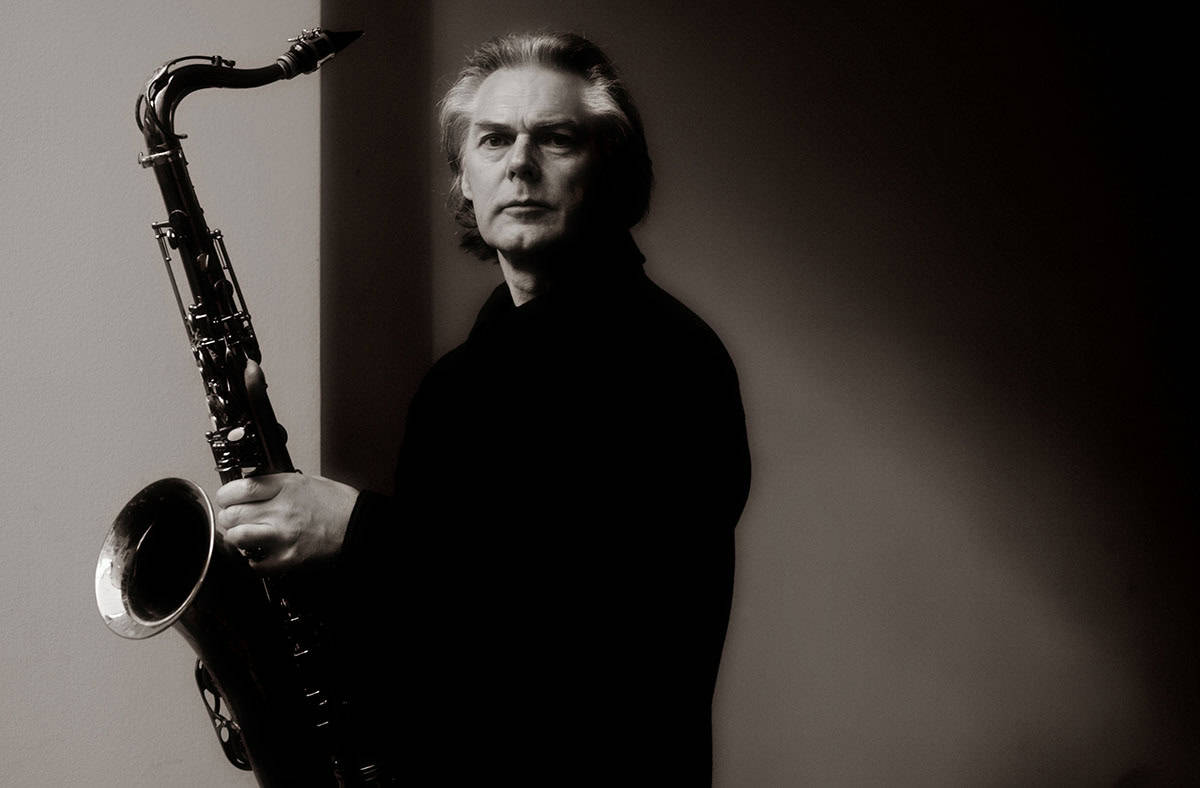
Jan Garbark’s work is situated on the border of jazz, Norwegian folklore, classical and ethnic music. Its hallmark has become its wide melodic singing arcs, the way of operating with space, silence, restraint of expression and crystalline sound.
He is the only child of Czesław Garbarek, a former forced laborer in a Nazi labor camp, who remained in Norway after the liberation and married the daughter of a farmer from the Mysen area. He began playing the saxophone at the age of 14, inspired by Coltrane’s radio broadcast of Countdown ; He mastered the technique of playing the instrument on his own.
In 1962, Garbark’s quartet won the Norwegian Amateur Jazz Championships, which became the beginning of the artist’s professional career. Soon after, he started working with Jon Christensen, Terj Rypdal and Arild Andersen, and then with George Russell, who was active in Scandinavia at the time. In the late 1960s, he recorded his first free-fusion albums, including Afric Pepperbird, released in 1970 by ECM. Under the banner of this publishing house, he has recorded several dozen albums both as a leader and partner of many outstanding musicians, m.in. Gary Peacock, Charlie Haden, Bill Frisell, Ralph Towner, Bobo Stenson, Eberhard Weber.
In the 1970s, he toured and recorded with Keith Jarrett’s European Quartet; the albums Belonging, My Song and Personal Mountains brought him worldwide recognition and are still considered one of the most important achievements in the careers of both artists. At the same time, he carried out his own projects (Witchi-Tai-To, Dis, Dancere, Places), which consolidated his image as a jazz impressionist. From the beginning, he has remained open to world music. He draws on the folklore of Scandinavia as well as the heritage of India and Pakistan – the albums Ragas and Sagas and Madar include improvised pieces in which he used the intonation, scales and ornamentation of Eastern music, while retaining all the features of his own style.
The album Officium (1994), recorded with the Hilliard Ensemble in the Austrian Abbey of St. Gerold, turned out to be a revelation. It was a pioneering, and fully successful, attempt at an improvising dialogue between the musician and the works of the Middle Ages and the Renaissance. Garbarek’s sparse parts do not interfere with the structure of the works, but rather create a subtle addition, a contrast in colours, and are an element that enlivens the static character of the music of the old masters. The extraordinary success of the album (five Golden Records) confirmed the versatility of the artist’s musical language, his imagination and consistency in combining distant styles; he successfully continued this direction on the albums Mnemosyne (1999) and Officium Novum (2010).
Garbarek has also collaborated with Polish musicians – Marcin Wasilewski and Sławomir Kurkiewicz (the album Neighbourhood with Manu Katché as the leader).
In Krakow, he will perform with the Jan Garbarek Group, which consists of: Trilok Gurtu, Rainer Brüninghaus and Yuri Daniel.
Trilok Gurtu (1951, Mumbai), world-famous tabloid, percussionist, drummer, multi-instrumentalist, composer. His music is a kind of bridge between the classical tradition of India and the practice of improvisation developed in jazz and Western music.
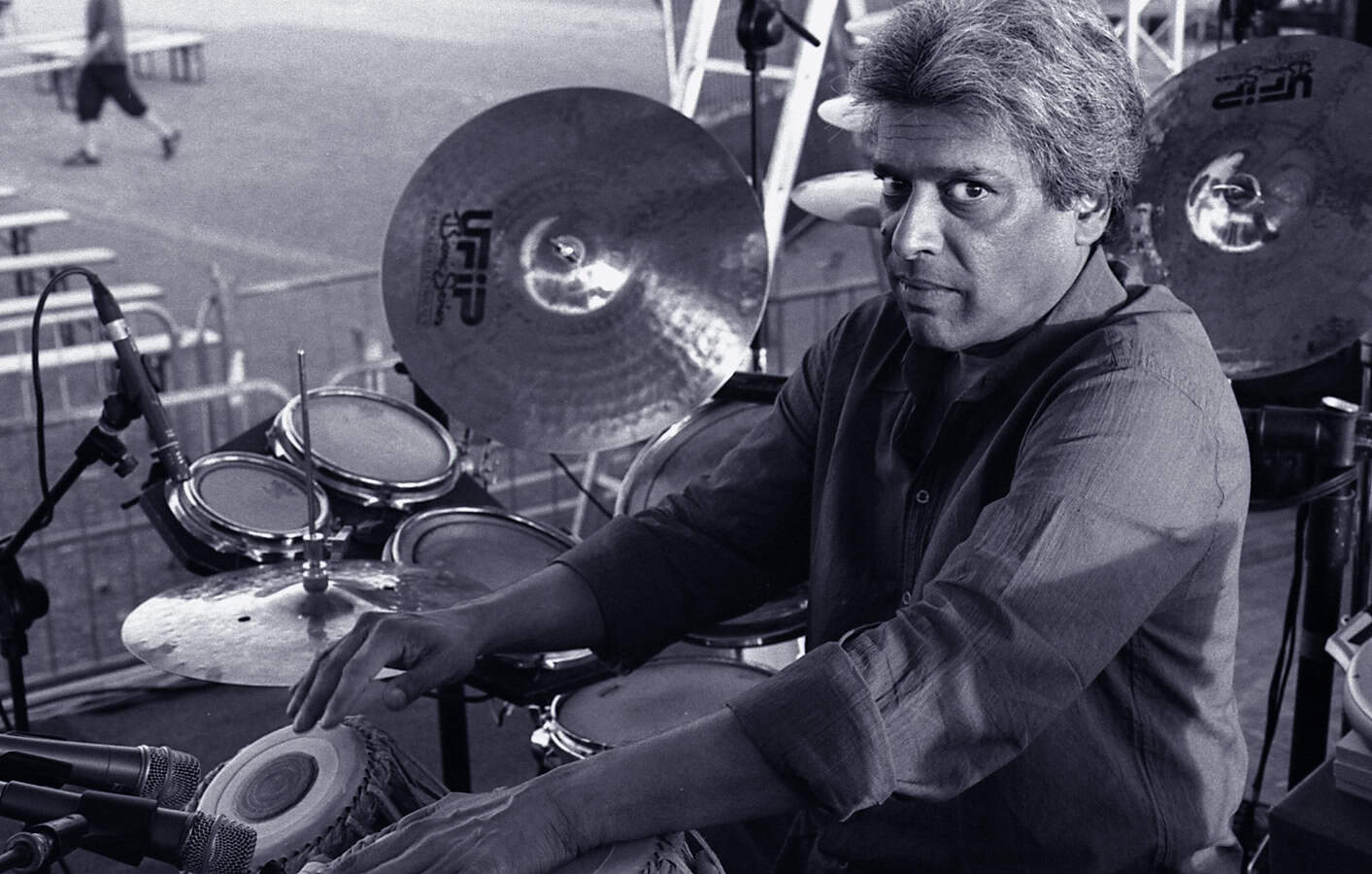
He grew up in a family deeply rooted in Indian culture – his mother, Shobha Gurtu, was an outstanding singer. Already in his childhood, he began to learn to play the tabla with renowned masters, gaining a thorough education in rhythm, tala structures and vocal and percussion techniques, including konnakol. In the 70s, he mastered playing a jazz drum kit, listening to radio broadcasts and records. After leaving India, he worked first in Europe and then in the United States, where he gradually gained recognition as a musician with exceptional craftsmanship and versatility. During this period, he began to enter the circle of the international jazz scene – first through collaborations with Charlie Mariano, and then, as part of concert and studio projects, with Don Cherry, Pharoah Sanders, Dave Holland and Joe Zawinul; in the second half of the 80s he was a member of the group Oregon.
He made his debut as a leader with the album Usfret (1988), opening a series of original projects in which he developed his own concept of synthesizing the rhythms of India, Africa, jazz, fusion and African music (albums: Crazy Saints, African Fantasy, 21 Spices with the NDR Big Band).
From the 1990s to the present day, he has performed and recorded with a whole host of outstanding artists, m.in including Jan Garbark (Living Magic, Visible World), John McLaughlin, Bill Laswell, Bob Dylan and Erik Clapton. Although he is sometimes associated with the jazz and world music scene, he emphasizes that he is closer to the idea of broadly understood improvised music than belonging to a specific genre.
Rainer Brüninghaus (1949), an outstanding German pianist and composer associated with ECM Records. He began his career in the 1970s, collaborating with Eberhard Weber, Charlie Mariano, Manfred Schoof, Ralph Towner and Kenny Wheeler, among m.in others. He also performed successfully as a soloist. In the next decade, he led his own band, carried out projects with German big-bands on the radio, recorded and toured with Markus Stockhausen, John Abercromb and Trilok Gurtu, among m.in others. Since 1988 he has been regularly performing and recording with Jan Garbark (m.in. albums Took Up the Runes, Twelve Moons, Rites). He also creates jazz music for various compositions, symphonic and film.
Yuri Daniel (1966), Brazilian double bassist and bass guitarist, composer, band leader, session musician. He studied double bass and composition at the Escola de Música e Belas Artes in Curitiba. At the end of the 1980s, he moved to Portugal, where, thanks to a scholarship, he studied at the jazz school operating at the Hot Clube de Portugal in Lisbon. He has collaborated with many leading figures of the Portuguese scene, m.in Rui Veloso, Maria João and pianist Mário Laginha; he also participated in the projects of American musicians – Rick Latham and John Stubblefield.
Since 2007, he has been a permanent member of the Jan Garbarek Group. With this band he tours all over the world and recorded the album Dresden – In Concert. In 2021, his original album Northern Lights was released.
July 2026
Szymon Mika Trio
Concert
The Szymon Mika Trio is one of the most interesting projects of the contemporary Polish jazz scene. The band led by the award-winning guitarist presents a subtle, emotional sound, combining modern jazz with elements of lyrical improvisation. Their concerts are an atmospheric journey through sounds – intimate, and at the same time rich in musical details and sensitivity.
A little selfish.
Little Egoists is a project of a young generation of musicians, combining modern jazz with elements of alternative and improvisation. The band is distinguished by a fresh sound, a bold approach to form and great artistic freedom. Their concerts are an energetic, non-obvious musical experience, full of creativity, dynamics and contemporary expression.
Hot Swing
Krzysztof Ścierański Quartet
Concert
The Krzysztof Ścierański Quartet is a project of one of the most outstanding Polish bass players, known for his virtuosity and unique style of playing. The band’s music is an energetic combination of jazz, fusion, funk and rock, full of improvisation and instrumental freedom. The quartet’s concerts are dynamic, lively performances that delight both jazz fans and listeners looking for fresh, ambitious sounds.
Chuck Frazier Trio (USA)
The Chuck Frazier Trio is an American jazz project set in the tradition of mainstream jazz, enriched with a modern approach to improvisation. The band presents a dynamic, swinging sound, in which the leader’s saxophone leads a distinct musical narrative. Their concerts are an energetic, stylish encounter with jazz in a classic and at the same time fresh version.
Bernard Maseli & Rasm Al Mashan
Concert
Bernard Maseli & Rasm Al Mashan is a unique meeting of jazz virtuosity with inspirations from the music of the Middle East. The project combines the sound of vibraphone with oriental rhythms and traditional instruments, creating a mesmerizing, trance-filled and improvised sound space. It is a concert that takes listeners on an intercultural journey – from jazz to ethnic, pulsating grooves.
DBD Trio
DBD Trio is a project based on a modern approach to the classic jazz trio formula. The band combines free improvisation with expressive rhythms and contemporary sound, creating dynamic, often non-obvious musical structures. Their concerts are intense, creative encounters with jazz, full of energy, dialogue and artistic courage.
Hildegarde Wanzlawe Quartet (France)
Chuck Frazier Trio (USA)
Location
- Tenczyn Castle in Rudno
- Rudno 1, 32-067 Rudno
